
How to Structure a Tennis Practice Session
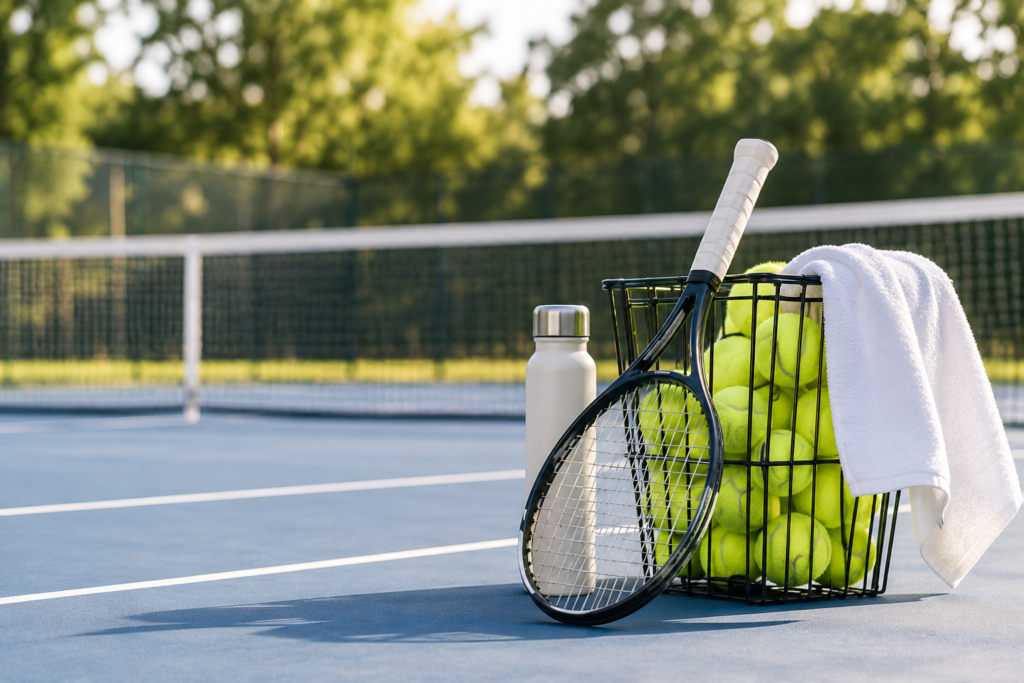
A good tennis practice is about more than just hitting balls. Learn how to structure your session, work on your technique, and make smarter decisions on the court.
It’s very easy to jump into a tennis practice session by hitting as many balls as possible. But have you ever stopped to think about what you actually want to work on?
As a recreational tennis player, I’ve found that having a bit of structure can make a big difference. When I take tennis lessons, there’s usually a specific focus for the session. Sometimes it’s working on technique, improving a particular shot or footwork. Other times, we focus on understanding how to play the game.
I think this is something recreational players can sometimes overlook.
Tennis isn’t just about hitting a good forehand or backhand. Recognising the ball, understanding your position on the court, choosing the right shot and knowing when to attack or play defensively are all important parts of the game.
Whether you’re working with a coach, hitting with a partner or practising on your own, having a plan can help you get more out of your time on the court.
If you’re new to the game, you may also find my guide on How to Start Playing Tennis as an Adult helpful.
Here are some ideas to help you structure your tennis practice sessions.
1. Warm Up
Start your practice session with a proper warm-up.
I like to spend a few minutes doing some light exercise to get my body moving. This can include jogging, side shuffles, dynamic stretches and some light footwork exercises.
Once on the court, start with some mini tennis. Hitting from the service boxes is a great way to get a feel for the ball, improve your control and find your rhythm.
Gradually move towards the baseline and start hitting groundstrokes.
The goal is to make consistent contact, find your timing and get comfortable with the ball before increasing the intensity.
2. Work on Your Technique
Improving your technique is one of the most important aspects of getting better at tennis.
Depending on your level and what you’re struggling with, you can dedicate some time to a particular shot or area of your game.
- Forehand: Work on your preparation, contact point, follow-through and consistency.
- Backhand: Focus on your timing, footwork and making clean contact.
- Serve: Work on your ball toss, rhythm, contact point and placement.
- Volleys: Focus on your positioning, keeping your movements compact and controlling the ball.
- Footwork: Practice your split step, recovery steps and moving efficiently around the court.
When I take tennis lessons, I find it helpful to have a specific focus for each session. Working on one or two areas makes it easier to pay attention to the details rather than trying to fix everything at once.
You don’t need to spend the entire session working on technique. Even dedicating 15–20 minutes to a particular area can be beneficial.
If you don’t always have a hitting partner available, there are also skills you can practice on your own. I’ve shared some ideas in my guide on How to Practice Tennis Alone.
3. Practice Different Types of Shots
Once you’ve worked on your technique, it’s time to practice hitting different types of shots.
Repeating the same forehand or backhand can be useful, but in a real match, you won’t always receive the same type of ball.
You’ll encounter different heights, speeds, depths and angles, so learning how to adjust is an important part of improving your game.
Try incorporating some of these situations into your practice:
- Deep balls: Practice moving back, creating space and returning the ball with control.
- Short balls: Work on moving forward, getting into position and attacking when the opportunity is there.
- Wide balls: practice moving from side to side, recovering and getting back into the point.
- High balls: Learn how to handle balls around shoulder height without losing control.
- Approach shots: practice moving forward after hitting a shot that puts your opponent under pressure.
Something I’ve learnt is that hitting the ball hard isn’t always the best option. Sometimes it’s better to play a controlled shot, recover your position and wait for a better opportunity.
4. Recognize the Ball and Make Better Decisions
This is something I think deserves more attention, especially among recreational players.
When playing tennis, you need to constantly assess what’s happening during a point. Not every ball should be approached in the same way, and not every opportunity is the right time to attack.
For example, your position on the court can help you decide what type of shot to play.
Behind the baseline
If your opponent hits a deep ball and pushes you towards the back of the court, you’re probably not in the best position to go for a winner.
Instead, focus on getting the ball back with good height, depth and control.
Sometimes playing defensively is the smarter decision. Your priority should be to stay in the point, recover your position and wait for a better opportunity.
Around the baseline
This is where you can start looking for opportunities to take control of the rally.
You might be able to hit a deeper ball, change direction or move your opponent around the court.
However, it’s important to recognize whether you’re balanced and in a good position before attempting a more aggressive shot.
Inside the baseline
If your opponent hits a short ball and you have time to move forward, you may have an opportunity to attack.
This could mean hitting into an open space, approaching the net or putting your opponent under pressure.
The key is recognizing when you have the advantage and making the most of it.
I’ve found that knowing when to attack and when to defend is just as important as improving your technique. You can have a great forehand, but if you don’t know when to use it, you can end up making unnecessary mistakes.
Understanding your current playing level can also help you identify which areas of your game need more attention. You can read more in my article, What Level Tennis Player Are You, Really?.
5. Practice Point Construction
Once you’ve worked on individual shots and decision-making, it’s time to put everything together.
Point construction is about learning how to build a rally rather than simply hitting the ball back and forth.
Here are some things you can practice:
- Hitting cross-court shots to create angles.
- Moving your opponent from side to side.
- Hitting deep to push your opponent behind the baseline.
- Recognizing a short ball and moving forward to attack.
- Changing direction when you have a good opportunity.
- Recovering your court position after each shot.
A useful drill is to start a rally with a specific goal. For example, both players must hit three cross-court shots before either player can change direction and attack.
You can also practice starting points with a short, deep or wide ball to simulate different match situations.
The aim is to get comfortable making decisions while moving, rather than only hitting shots when you have plenty of time to prepare.
6. Play Practice Points
One of the best ways to see whether your practice is translating into your game is to play points.
After working on your technique and drills, spend some time playing practice points or a short practice set.
This gives you an opportunity to put everything together:
- Recognizing when to attack or defend.
- Choosing the right shot for the situation.
- Recovering your position after hitting the ball.
- Being patient instead of rushing to hit a winner.
- Putting the shots you’ve been practicing into play.
It’s easy to hit a beautiful forehand during a drill when you know exactly where the ball is going. However, playing points is a different story. You have to react to your opponent, adjust your position and make decisions in the moment.
Practicing points helps bridge the gap between hitting drills and playing an actual match.
If you’re looking to build your confidence when playing points, you may also enjoy my article on Building Confidence on the Tennis Court.
7. Cool Down and Reflect
Before leaving the court, spend a few minutes cooling down and stretching.
I also like to reflect on how the session went.
What went well? What was challenging? Did I struggle with a particular shot? Did I keep making the same mistake?
You don’t have to overanalyze every session, but recognizing one thing you did well and something you’d like to improve can give you a clear focus for next time.
I find that having a small goal for each practice session makes it easier to track progress over time.
Example of a 60-Minute Tennis Practice Session
If you’re unsure how to divide your time, here’s a simple practice schedule you can follow. You can adjust it depending on your level, fitness and what you’re working on.
Activity | Time |
Warm-up and mini tennis | 10 minutes |
Technique and groundstroke drills | 15 minutes |
Movement and different ball scenarios | 10 minutes |
Point construction and tactical drills | 10 minutes |
Practice points or a short game | 10 minutes |
Cool-down and reflection | 5 minutes |
Total | 60 minutes |
You don’t have to follow this schedule exactly. If you’re working on your serve, for example, you might want to spend more time serving and practicing returns. If you’re preparing for a match, you may want to dedicate more time to playing points.
The important thing is to have a purpose behind what you’re doing.
Final Thoughts
Improving your tennis takes time, patience and consistency. However, one of the best ways to get more out of your practice sessions is to stop focusing on how many balls you’re hitting and start thinking about what you’re learning.
Technique is important, but understanding how to play the game is just as valuable. Learning to recognize different balls, position yourself on the court, construct points and decide when to attack or defend can make a real difference to your game.
As recreational players, we don’t need an overly complicated training plan every time we step onto the court. Sometimes, having just one or two goals for the day is enough.
Whether you’re working on your forehand, improving your footwork or making better decisions during a rally, make your practice count. It’s not about hitting more balls; it’s about learning to play better tennis.
Keep exploring The Modern Serve: